
DARC Distinguished Lecture: Florian Cramer
The fourth annual DARC distinguished lecture will be delivered by digital aesthetics pioneer Florian Cramer on 6 November 2026

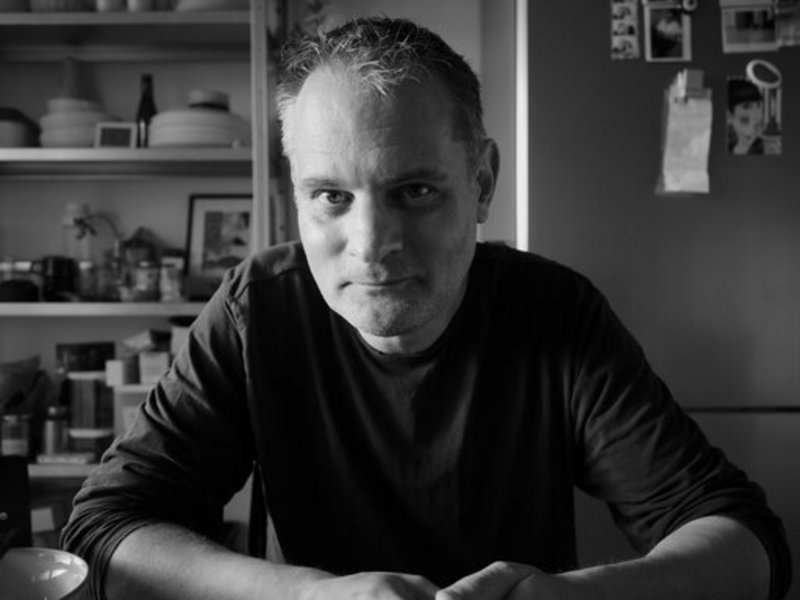
Join us for the fourth annual DARC Distinguished Lecture at the Jutland Art Academy on 6 November!
The lecture will be delivered by Professor Florian Cramer, who has been a pioneer in the field and continues to be part of its ongoing development. Among other things, Cramer has worked on software art, post-digital aesthetics and publishing, and artistic research.
Please find title and abstract for the talk below.
Venue: Jutland Art Academy [da: Det Jyske Kunstakademi], Kalkværksvej 30, 8000 Aarhus C.
Time: November 6, 2026, 14.15-16.00, followed by a reception.
Please register free of charge for the talk so we can prepare for the reception.
Register here: https://event.au.dk/events/darc-distinguished-lecture-florian-cramer/registration
- - -
Spontaneous Order Revisited: Rereading Discredited Neoliberal Theory for Technological, Social and Art Practice
This lecture attempts something untimely: a critical reappreciation of the neoliberal economist Friedrich Hayek. His "spontaneous order" and his aversion to central planning became the credo of contemporary capitalism, from public governance to the digital platform economy. Bottom-up self-organization, commons and Free/Open Source software are now suspected of having, wittingly or not, paved the way for oligopolies and oligarchies, with the products of creative and immaterial labour ending up, among others, as AI training data. Remedies proposed since the 2010s, from left-wing accelerationism to revived authoritarian socialism, converge on one idea: state power and central control.
Hayek will be read here not as an economic policy theorist but as a systems theorist. What can be learned if "spontaneous order" is not a prescription but an observation of messy reality? How does it relate to its immediate contemporaries - Bertalanffy's "open systems", Popper's "open society", Feyerabend's "epistemological anarchism" - and to parallel but largely unconnected ideas in the arts, such as Umberto Eco's open work and the poetics of indeterminacy in Cage and Fluxus?
Ultimately, the question is to what extent "spontaneous order" offers a useful perspective on contemporary social, artistic, technological and research practices, from ruangrupa's lumbung and Cuba's El Paquete Semanal to the Fediverse.
- - -
Florian Cramer, professor of artistic research and emergent forms of cultural production at Willem de Kooning Academy, Rotterdam University of Applied Sciences, The Netherlands, and member of 展銷場 Display Distribute ; http://floriancramer.nl